AI Fundamentals
A First Course in Artificial Intelligence.
How AI learns, sees, reads, and creates, explained in plain language for every undergraduate, in any major, with no programming background. Every chapter has a notebook to try in your browser. By Nitin Kalé.
A working draft. Chapters appear here as they are written and reviewed; the first edition pilots in Fall 2027. The first book in the AI Workforce of the Future series.
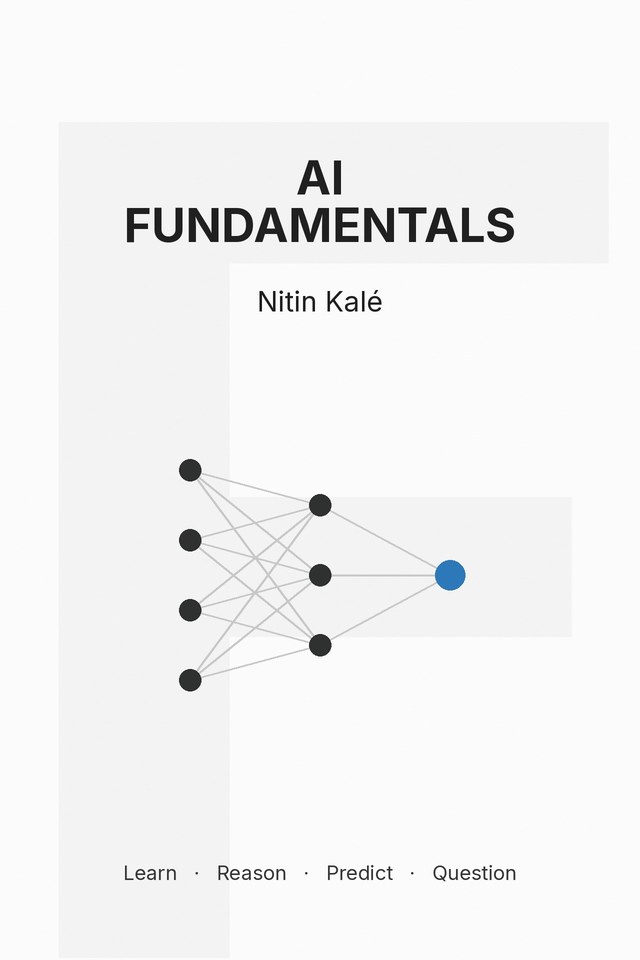
From data to prediction.
Most of the AI you use learns patterns from examples. This book shows you how, one idea at a time, from the first rules and the first neural networks to the models behind today's chatbots and image generators.
Concepts first
Every idea is explained in plain language before any code.
Try it in Colab
Every chapter has a short notebook that runs in your browser, free.
AI and us
Every chapter asks what its idea means for people and society.
Eighteen chapters. Five parts.
From what AI is to how it shapes the world we live in.
What AI Is
- 1What Is AI?
- 2A Short History of AI
- 3Rules, Heuristics, and Learning
How Machines Learn
- 4Working with Data in Python
- 5Supervised Learning
- 6Unsupervised Learning
- 7Evaluating Models
Neural Networks
- 8From the Perceptron to Neural Networks
- 9Your First Neural Network
- 10Recognizing Handwritten Digits
Modern AI
- 11How Machines See
- 12Sequences and Forecasting
- 13Transformers and Large Language Models
- 14Generative AI
- 15Working with AI
- 16From Models to Agents
AI and Us
- 17Intelligence, Artificial and Human
- 18AI and Society
Written for every major.
No background in programming, statistics, or computer science is assumed.
Students
In business, health, engineering, communication, the arts, and the sciences.
Future builders
Who want to understand AI before building with it in Building AI Agents.
Professionals
Who use AI every day and want to know how it works and where it fails.
Instructors
Looking for a first course with notebooks and exercises built in.
Designed to be taught.
Every chapter follows one rhythm, with learning objectives you can map to your course.
- The idea, in plain language
- How it works, step by step
- AI and Us: what it means for people
- Try it in Colab: a short notebook
- Key terms and a summary
- Exercises tied to each objective
What students use
A free Google Colab notebook in every chapter, with the libraries already installed. Notebooks are companion materials shared under the GSSF Press Book License.
The AI Workforce of the Future series.
Three books from GSSF Press, a program of the Global Student Startup Foundation: the foundations of AI, building your own AI Team, building whole organizations of AI agents and people, and building AI startups.
AI Fundamentals
A first course in artificial intelligence, by Nitin Kalé.
This book · Pilot · Fall 2027
Building AI Agents
Building your own AI Team: AI co-workers who work for you, safely. By Mike Lee.
Visit the book →Book 2 · Next in the series
Building Agentic Organizations
How to build a living, learning organization: knowledge, agents, websites, and dashboards that fit themselves to their people and keep learning. By Mike Lee.
Visit the book →Pilot · Fall 2027
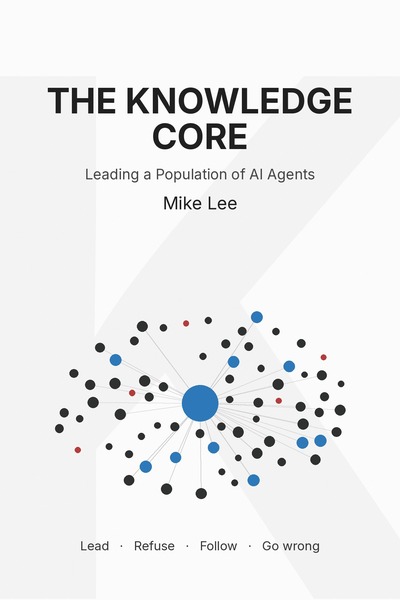
The Knowledge Core
Leading a Population of AI Agents: a short companion for leaders. By Mike Lee.
Visit the book →Companion · FreeGSSF Press. We make AI education accessible to undergraduate students regardless of financial ability or location, so every student can build with AI.

About the author.
Nitin Kalé is a Professor at the USC Viterbi School of Engineering, where he has built USC's largest applied technology programs. He has spent nearly three decades at the frontier of applied AI, data analytics, blockchain, and enterprise systems, and is a published author and sought-after speaker who travels the world to address academic and industry audiences. A GSSF Board Member, he built the Competition's India Regional Competition, which reaches hundreds of universities and thousands of students.